Mechanical Testing Services
Mechanical Testing Services
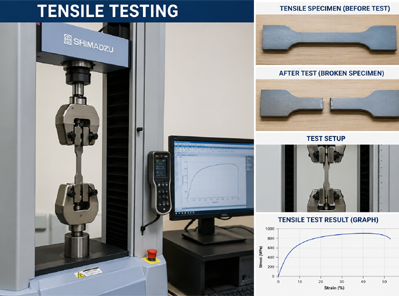
Tensile Testing:-
Tensile Testing is a mechanical test used to measure a material's strength, ductility, and elongation by pulling it until it stretches or breaks.
Why it matters:
-
Ensures material strength and quality.
-
Verifies compliance with industry standards.
-
Identifies the maximum load a material can withstand.
-
Evaluates ductility and elongation before failure.
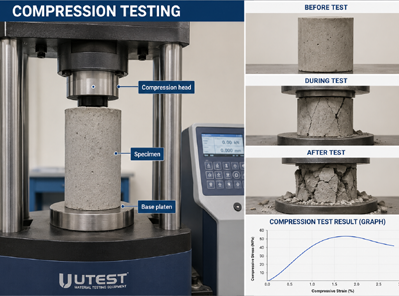
Compression Testing:-
Compression Testing is a mechanical test used to measure a material's compressive strength and deformation by applying a squeezing (compressive) force until it deforms or fails.
Purpose of Compression Testing:
-
Measures the material's compressive strength.
-
Determines how a material behaves under crushing or squeezing forces.
-
Evaluates deformation and load-bearing capacity.
-
Ensures compliance with industry standards.
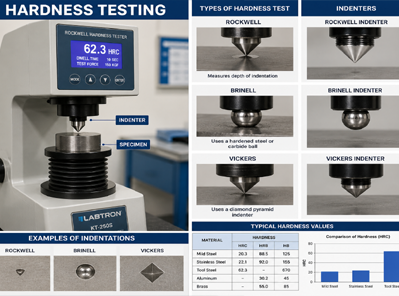
Hardness Testing:-
Hardness Testing is a mechanical test used to measure a material's resistance to indentation, scratching, or wear by applying a controlled force to its surface.
Why Hardness testing is Important:
-
Measures a material's resistance to wear and indentation.
-
Ensures consistent material quality.
-
Helps select the right material for specific applications.
-
Predicts durability and service life.
Impact Testing:-
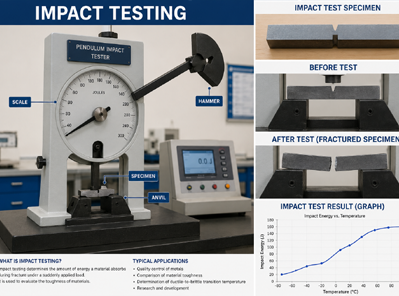
Impact Testing is a mechanical test used to measure a material's ability to absorb sudden shock or impact energy before it fractures or breaks.
Why it matters:
-
Measures a material's toughness and impact resistance.
-
Evaluates performance under sudden shock or dynamic loads.
-
Helps prevent unexpected material failure.
-
Ensures compliance with industry standards.
Bend/Flexural Testing:-
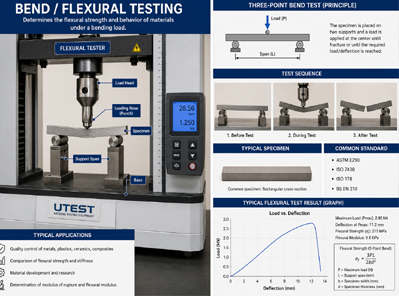
Bend/Flexural Testing is a mechanical test used to measure a material's flexural strength and stiffness by applying a bending force until it deforms or breaks.
Why it matters:
-
Measures a material's flexural strength and stiffness.
-
Evaluates performance under bending loads.
-
Helps identify cracking, deformation, or failure during bending.
-
Ensures compliance with industry standards.
Fatigue Testing:-
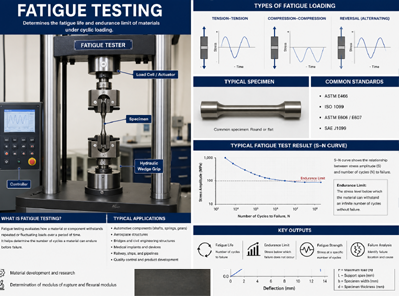
Fatigue Testing is a mechanical test used to measure a material's ability to withstand repeated or cyclic loading over time before it develops cracks or fails.
Why it matters:
-
Measures a material's resistance to repeated or cyclic loading.
-
Predicts the fatigue life and durability of components.
-
Helps prevent unexpected failures during long-term use.
-
Ensures compliance with industry standards.
Torsion Testing:-
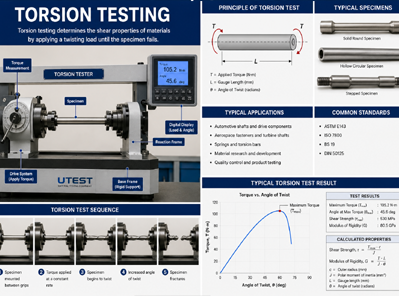
Torsion Testing is a mechanical test used to measure a material's strength, stiffness, and resistance to twisting (torsional forces) by applying torque until it deforms or fails.
Why it matters:
-
Measures a material's resistance to twisting forces.
-
Determines torsional strength and stiffness.
-
Helps prevent failure in rotating components such as shafts and axles.
-
Ensures compliance with industry standards.
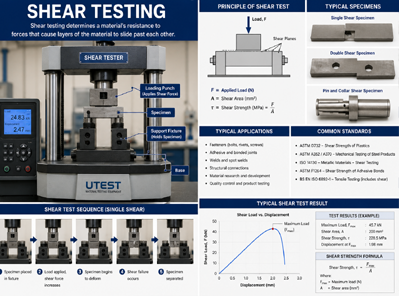
Shear Testing:-
Shear Testing is a mechanical test used to measure a material's shear strength by applying parallel forces until the material slides, deforms, or fails.
Why it matters:
-
Measures a material's shear strength and resistance to sliding forces.
-
Evaluates the performance of materials and joints under shear loads.
-
Helps prevent structural and component failures.
-
Ensures compliance with industry standards.
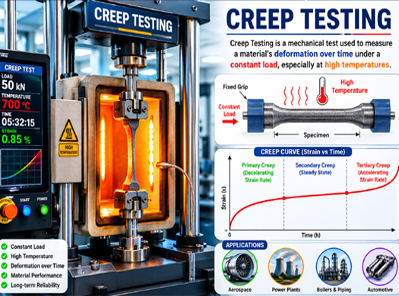
Creep Testing:-
Creep Testing is a mechanical test used to measure a material's deformation over time under a constant load, especially at high temperatures.
Why it matters:
-
Measures a material's long-term deformation under constant load.
-
Evaluates performance at high temperatures.
-
Predicts service life and durability.
-
Helps prevent failure in long-term applications.
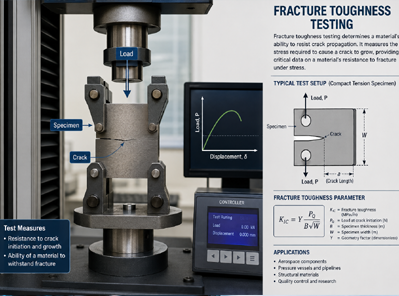
Fracture Toughness Testing:-
Fracture Toughness Testing is a mechanical test used to measure a material's resistance to crack initiation and crack propagation under applied stress.
Why it matters:
-
Measures a material's resistance to crack growth.
-
Helps prevent sudden and catastrophic failures.
-
Evaluates the safety and reliability of critical components.
-
Ensures compliance with industry standards.